


Former President J. Bradley Creed talks about legacy and the importance of ‘character education
The majority of colleges and universities that formed in the years leading up to the Civil War in the early and mid 19th Century were formed — much like Buies Creek Academy several years later — by Christian ministers or church groups. Curriculums were often interdisciplinary, and students didn’t always have majors and minors.
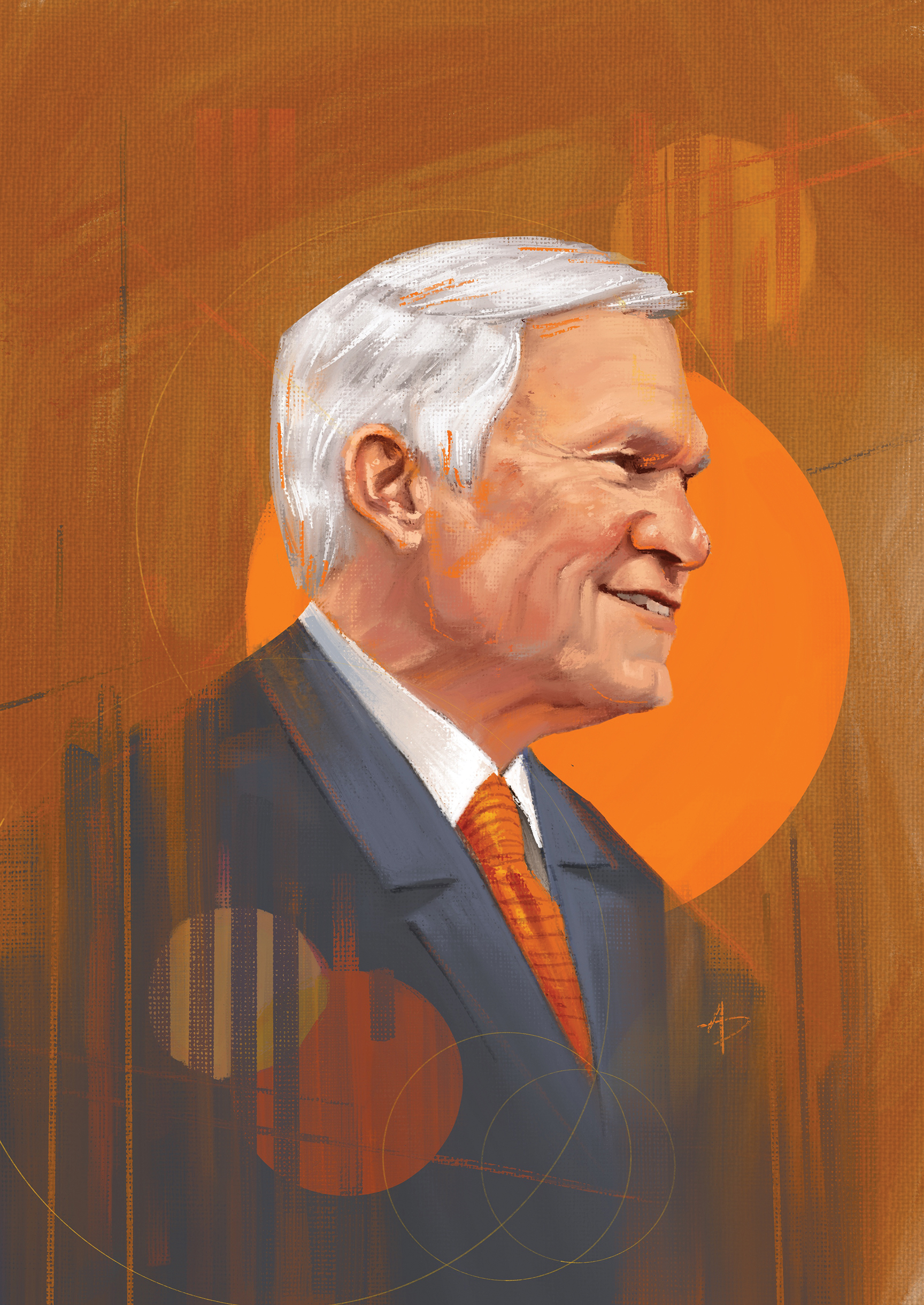
And often, the capstone unit required of all students was a course in moral philosophy. “I’m sure it was dry as dust at times,” J. Bradley Creed says in recalling this bit of U.S. antebellum higher education history, “particularly because it was the president of those schools who taught it.”
The preeminent textbook on moral philosophy at the time was The Elements of Moral Science, by Brown University President Francis Wayland, a Baptist minister and early advocate for anti-slavery causes. His book dedicated a chapter to character, calling it “by far the most important of all possessions in which a man can call his own” and “the great practical aim of Christianity.”
When J.A. Campbell launched his academy 12 years after the end of the Civil War, he was careful not to tie it to any one religious denomination, but rather as a school that “emphasized moral training and its influence on the formation of good character.”
Somewhere along the way in the 138 years that followed, Creed says, higher education as a whole in the U.S. got away from prioritizing “character education.” As only the fifth president in Campbell University’s history, he sought to reintroduce the idea to the school’s 21st Century curriculum. In 2024, the University became one of 29 schools in the country to receive an Institutional Impact Grant from Wake Forest University’s Educating Character Initiative, and under Creed, Campbell launched its Hallmarks Initiative, infusing character, initiative and calling into the school’s undergraduate learning experience.
In his 10 years as president, Creed oversaw the construction of the Oscar N. Harris Student Union and the massive fundraising campaign that made it happen, guided Campbell through the COVID pandemic and paved the way for the athletics program’s inclusion into the Coastal Athletic Association. But when asked about his legacy leading up to his retirement — which became official on July 1 — Creed points to character and his efforts to make it a big part of who a Campbell University graduate is and what he or she will become.
“I’ve spent a lifetime reflecting on what education should be, particularly at a place like Campbell,” Creed says. “We’re a knowledge enterprise, but we’re also in the business of changing people’s lives. Campbell is a place where you can become prepared to do certain things in life, but it’s also where you can become a certain kind of person. I think that’s part of the difference that we offer.”
Creed says Campbell’s focus on character education comes at a time when character has become less of a “criterion” of leaders and elected officials.
“I think some of the most notorious and public failures — whether it’s somebody in business or politics — are often due to failures of character and not competence,” he says. “That’s why it’s important now more than ever that we focus on this.”
Creed and Vice President for Student Life and Christian Mission Dr. Faithe Beam charged faculty to become early adopters of the character initiative at Campbell and incorporate its hallmarks into their instruction. The University hired Rachel Nelson as director of the initiative and got groups like Student Life and Athletics to create workshops to encourage open dialogue and new ideas. The goal was to include character as a capstone to an undergraduate’s education journey.
“We hear so much about identity and students trying to ‘find themselves,’” Creed says. “It’s part of the reason why Campbell is so important. A part of who these students are going to become is tied to their experience here.”
More important than being a person who is great in their careers, Creed says he wants students to become “good people, because the world needs more good people.”
“When we talk about character here, we think about the classic virtues,” he says. “There’s ethics in business, medicine and journalism, and while I think there’s a place for that, too often we’re teaching students what they need to know so they don’t mess up or get in trouble. [Character education] is more about the formation of the person. It’s very consonant with our ideas of the Christian faith and growing in Christ.”
Campbell’s Hallmarks initiative, he says, is an expression of the University’s mission. He says incorporating character, initiative and calling into the curriculum and into faculty and staff training is one thing faith-based institutions can do (and do well) that other schools can’t.
“I think with what’s happening in our country — not just at the political level, but all across the board — we need more good people and people of character,” he says. “Because it’s essential that we have a moral compass guiding us. I think schools like Campbell have a place to shine brightly going forward into the darkness.”
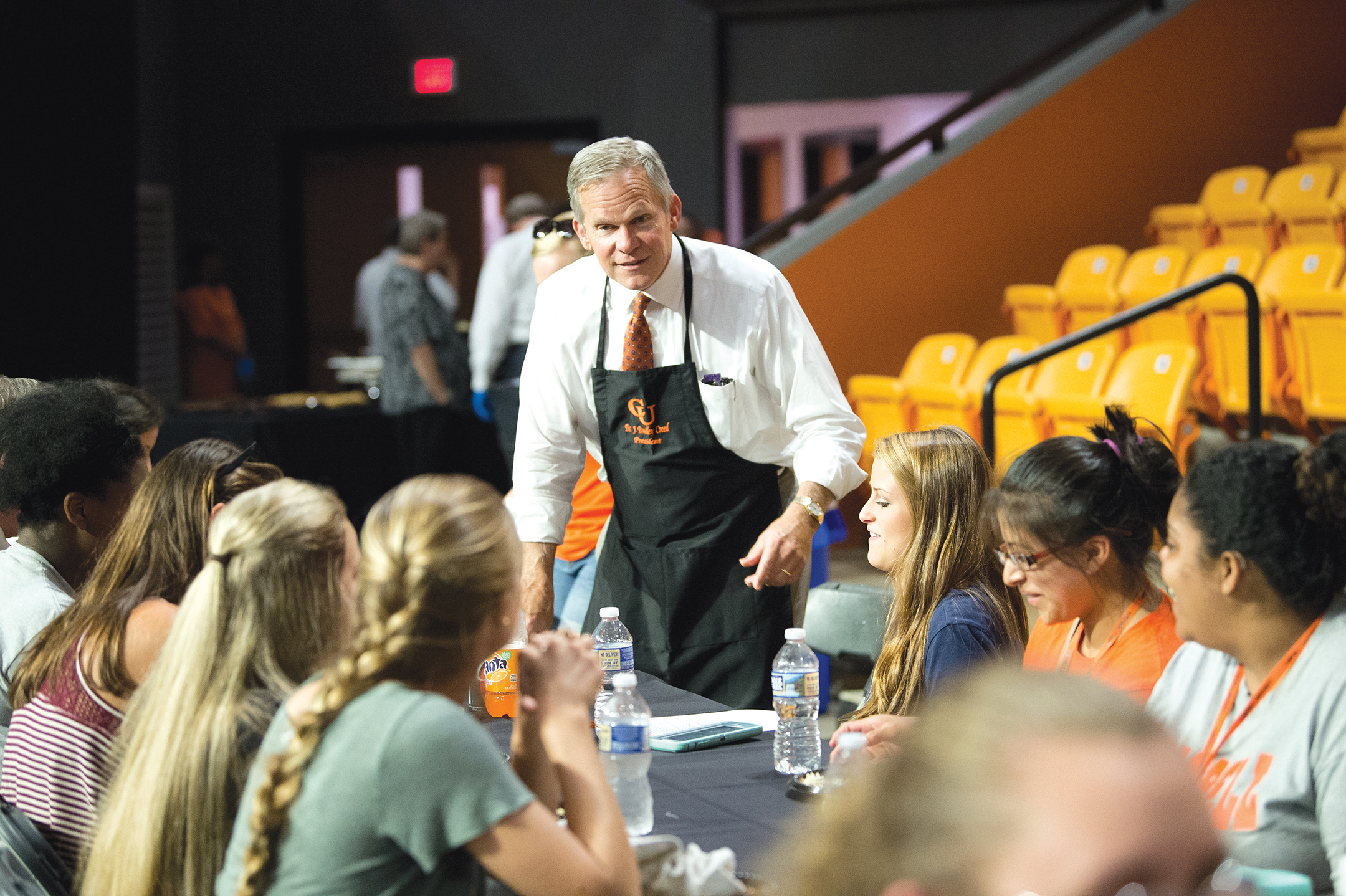
WISE WORDS
In a ceremony honoring his 10 years of service last spring — just weeks before his final day as president — Creed got a surprise recorded message from his father, Dr. Charles Creed. In it, the elder Creed, who turned 97 this year, told his son how proud he was of the work he and wife Kathy did in Buies Creek and asked him to hurry up and get to their hometown of Jacksonville, Texas for a visit.
Creed smiled as tears welled up in his eyes during the message. He’d later say he was touched by the gesture by Campbell and the words from his father, who “always knows the right thing to say in the right circumstances.”
“I had a really good relationship with my father, so I knew my destiny was a life of respectable mediocrity,” he jokes. “Because, as you know, those who have not-so-great relationships with their parents are the ones who go on to do big things, because they have something to prove.”
The character his parents instilled in him is the reason Creed feels so strongly about doing the same for the students under his charge. He says the Bible verse his father passed on to him — the same one his grandmother passed on to his father — is from Proverbs: “Trust in the Lord with all you heart and lean not in your own understanding. In all your ways acknowledge him, and he will direct your paths.”
In his 10 years at Campbell, Creed let just about anyone and everyone know of his Texas roots and love for the Lone Star State. So he said it may come to a shock to many that he and Kathy are staying in North Carolina for retirement. He said higher education has been a rewarding career, but it’s come with several “big moves” — 14 to be exact — and the Creeds are ready to settle down. Also, their daughter lives in Raleigh, and his son (currently in Texas) is looking to move east for his medical school residency.
Just weeks before he handed the keys to the presidential office to Campbell’s sixth president, Dr. Willliam Downs, Creed said he had found peace in his decision to retire. There is writing and more research to be done, he says, and friends and family to visit. But most of all, he just wants to “succeed at being retired.”
“My enthusiasm about what lies ahead is increasing. And my biggest plan is to just be with my wife Kathy and enjoy whatever the future has in store for us.”
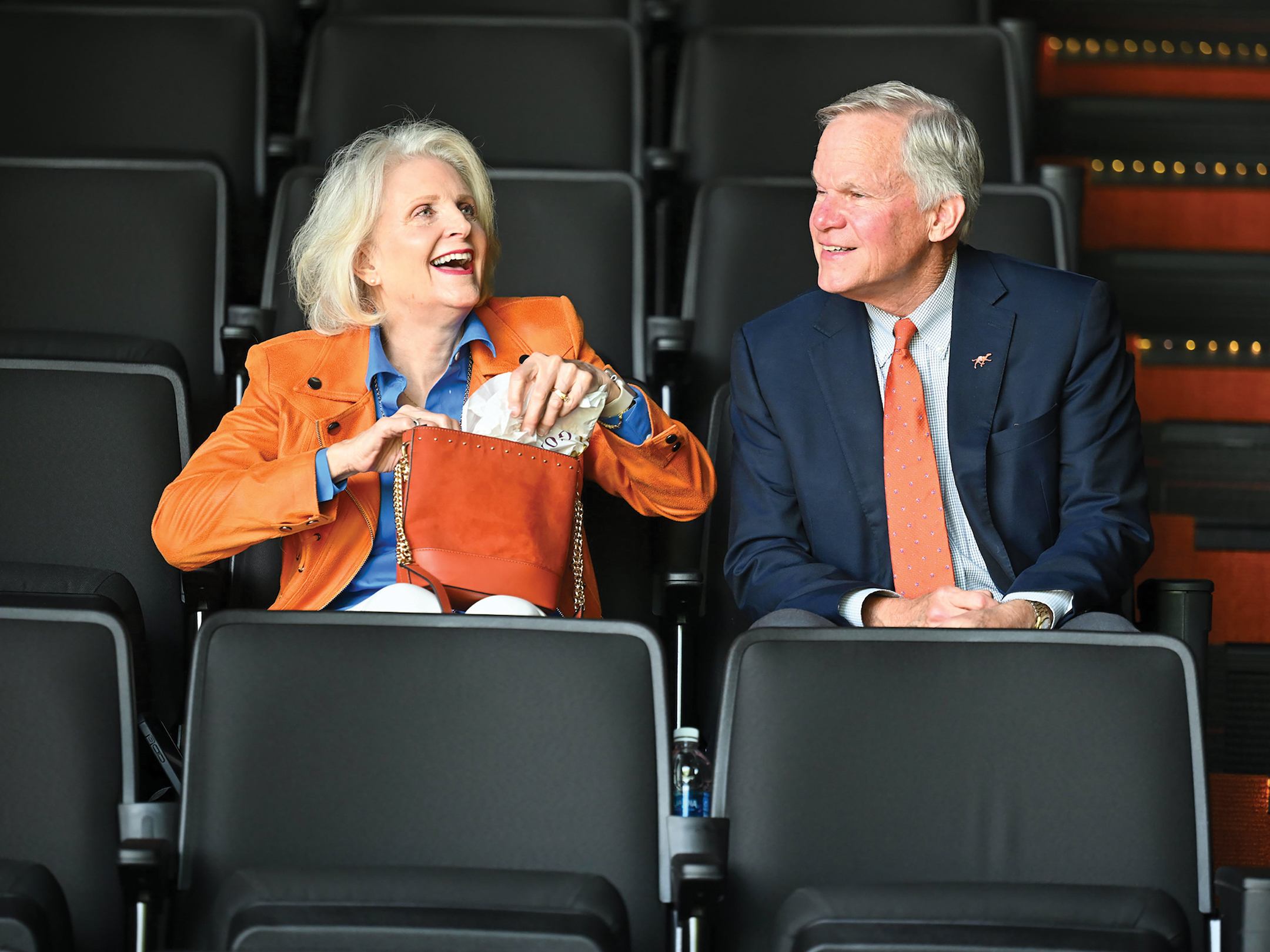
Creed on the Student Union
Creed on the Student Union “It was a much needed addition to this campus. It was way overdue and it became very symbolic that the students were important and that Campbell could be more than a suitcase school. Now it’s hard to believe we didn’t have it for so long. It’s become an interpersonal place where people gather, sit around tables for meals or to study and just interact with others face to face. It’s what our university already was, and we just needed a building to bring out what is at the heart of Campbell University.”
Creed on the Pandemic
“The pandemic put enormous stress on the University. But there were some real takeaways from the experience. We will forever be indebted to that response team that was made up of medical personnel and others who monitored the situation and led us through it. It was almost divine intervention that the medical school launched just a few years before, and we had all of these professionals on campus who made a huge difference. And then the cooperation of faculty, staff and students — our students experienced very real challenges during that time, and they were nothing but cooperative, understanding and encouraging. I’ll forever be grateful to them.”