


FINNOVATION
After losing both legs to artery disease, local man works with Campbell University students to design and build his prosthetic swim fins
By Billy Liggett
Photos by Charissa english, Evan Budrovich and Will Bratton
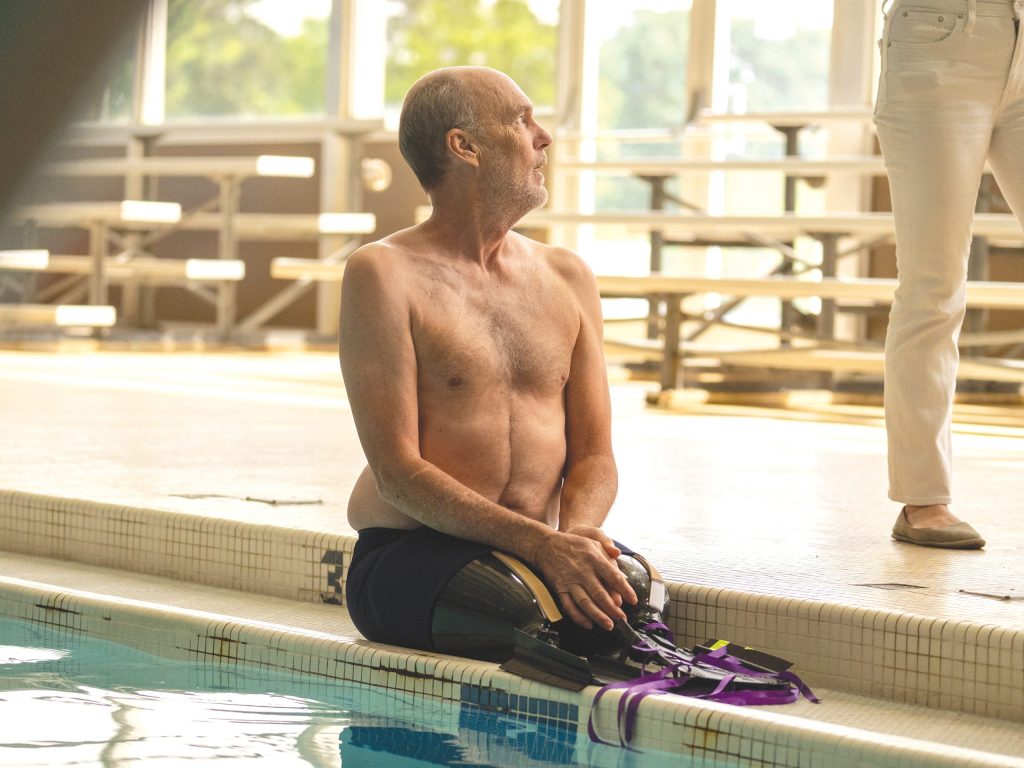
Doug Thingelstad catches his breath as he’s — for the fifth time today — surrounded by students and professors holding notepads and cameras, monitoring and recording his every kick and stroke. Every breath and heartbeat. The sweat beads on his already wet brow after his sixth lap in 15 minutes inside a sunlit, humid Nathan Johnson Aquatic Center.
The 63-year-old Harnett County man has never been a fan of having an audience. But he’s grown used to this crowd and this attention, created last fall in the name of education, research and his own good health. This team of future engineers and physical therapists are here to build the perfect prosthetic fin so Thingelstad — who lost his legs in 2020 from peripheral artery disease — can swim with less burden on his upper body and focus more on his “healthspan” instead of his limitations.
It’s early April, and the design is almost complete. On this day, Thingelstad cuts through the water like a zebrafish (the aquatic version of a lab rat), and these fins are the closest he’s felt to “natural swimming” since this whole process began.
“When something like this happens to you, it’s easy to just give up and do nothing,” he says after an hour of laps, tests and Q&As from his Campbell team. “I chose to go a different route. And I think what these students are doing is important work, and not just because they’re doing it for me.
“This can help a lot of people.”
Thingelstad was always active, always in a sport growing up in Virginia Beach. He played volleyball in college and played in high-level beach volleyball leagues well into his 30s.
He was in his 50s when the pain and numbness began in his legs. Thingelstad was diagnosed with peripheral artery disease, a circulatory problem where narrowed arteries in the extremities reduce blood flow. Extreme cases, like his, lead to tissue death and, in those cases, amputation.
His first amputation, above the knee, came when he was 55, and two years later, he lost his other leg. According to several studies, roughly a third of people who lose a limb experience clinically significant depression — and Thingelstad says he faced a crossroads following his amputations.
Feel sorry for himself, or get out there and make the most of it? He chose the latter.
“After something like this happens to a person, it’s easy to stay at home and do nothing,” he says. “I didn’t want to do that. I just think it’s important to stay active — it beats sitting on my ass all day doing nothing.”
If there was a sport with leagues for differently abled people, Thingelstad wanted to try it. Volleyball, of course. Tennis. The recent Winter Olympics inspired him to give sled hockey a try.
Thingelstad moved to Harnett County before his health issues, and despite the proximity, didn’t know a whole lot about Campbell University until he heard about a wellness program offered by the Doctor of Physical Therapy program that provides a service to local residents who need it locally while providing hands-on, faculty-supervised training for the future therapists. He signed up to learn about stretches and exercises for his hips and to stay in shape for the new sports he was taking on.
He also inquired about using the swimming pools at nearby Keith Hills Country Club and the Nathan Johnson Aquatic Center on campus.
“I didn’t think they’d let me in the pool, to be honest,” Thingelstad says. “At least not without passing some sort of swim test. You know, here’s a guy with no legs trying to swim … I thought I’d be too much of a risk.”
He was offered swim lessons at Keith Hill Country Club, and it was at this time when he met physical therapy students Emily Macon and Kelsie Underwood — both of whom he knew through his therapy on the health sciences campus. Macon and Underwood provided therapy as students to train him for the pool and eventually the sessions he’d go through to test his customized prosthetics.
Macon, a Wake Forest native, says swimming is what got her into physical therapy to begin with. She suffered an injury in the sport in middle school and sought help from licensed PTs during her recovery. That experience, she says, was life changing. “I knew from then on I always wanted to work with athletes, and I haven’t looked back,” she says.
For swimmers, the common thought is that the sport requires 70 percent upper body work (arms, shoulders, chest muscles) and 30 percent legs. Proper swimming technique demands significant leg strength and endurance. Swimming with no prosthetics means extra upper body work, Thingelstad says, which gets exhausting very quickly.
It’s also a “weird” feeling, he says.
“It’s impossible to explain how it feels, because your mind is telling you to kick, and you can’t. The whole lack of balance is crazy,” he says. “But once you get in the pool — and once you get used to the fact that your bottom half is going to try to float upward — you learn to adjust. But it’s much harder to do.”
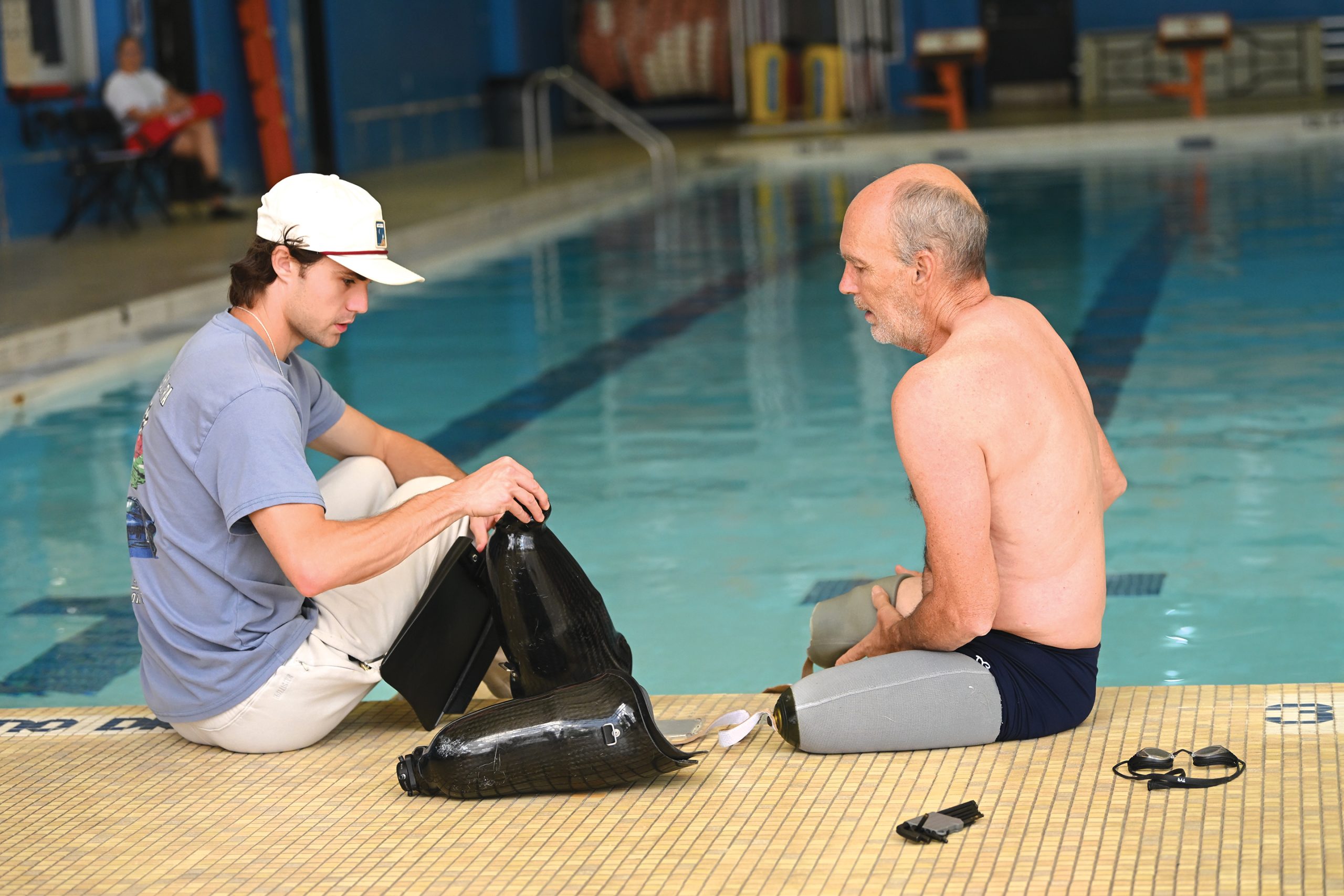
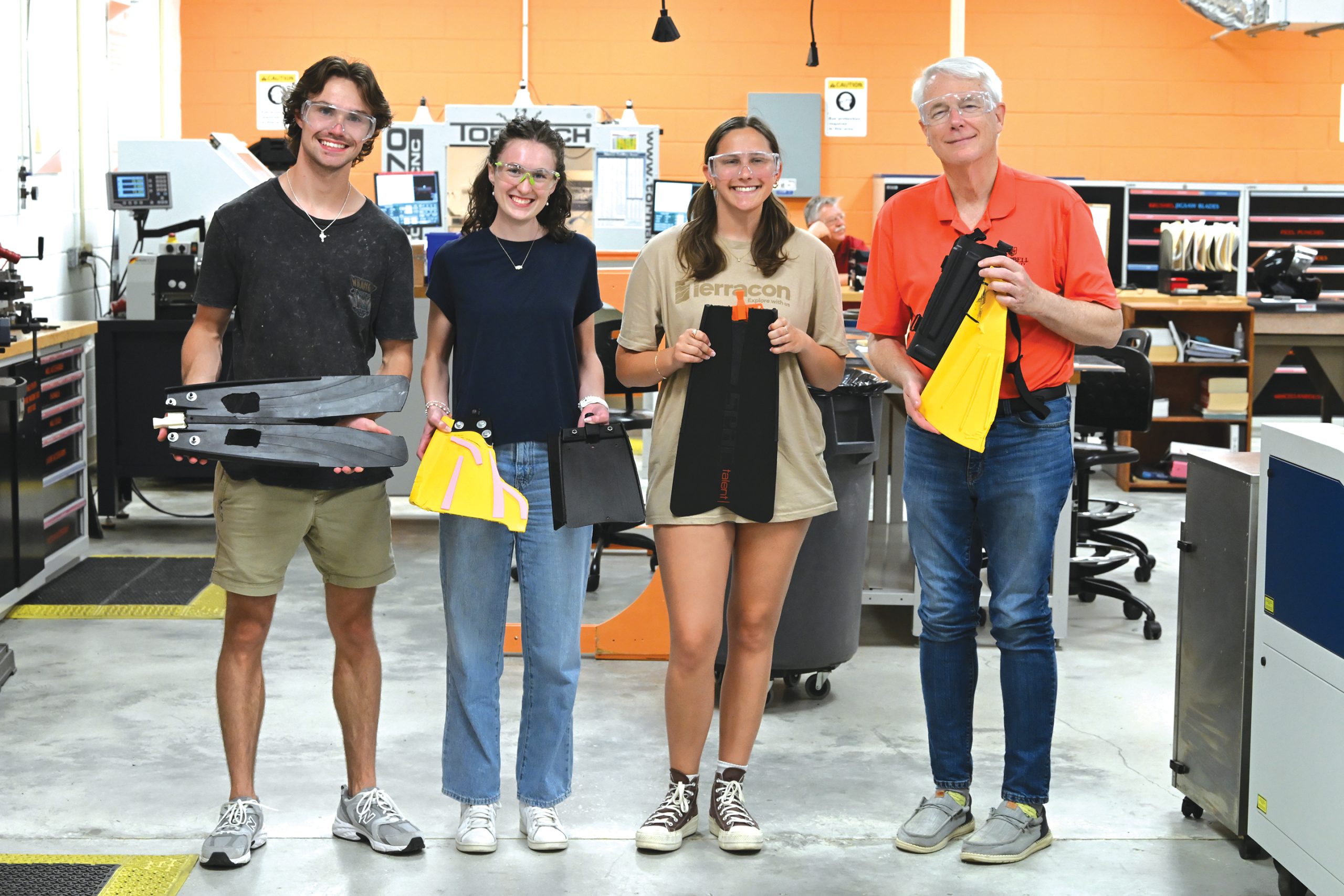
Not long into his lessons, Thingelstad asked about prosthetic fins. Did they exist? Could the school help in his search for some? Could they get access to the School of Engineering’s 3D printer and create some? Campbell offered something better. The School of Engineering put three of its students — seniors Dantzler Bonner, Noah Baker and Sarah Fitzkee — on the project to work with Macon and Underwood on finding (and creating) the right fins to make swimming feel as natural as possible.
“I didn’t know it was going to be such a big thing,” Thingelstad admits. “But when you think about it, they actually have to be able to fit into the sockets that I have, they have to see what works best for me, and they have to do a lot of testing. There was definitely a lot more thought put into it than I ever imagined.”
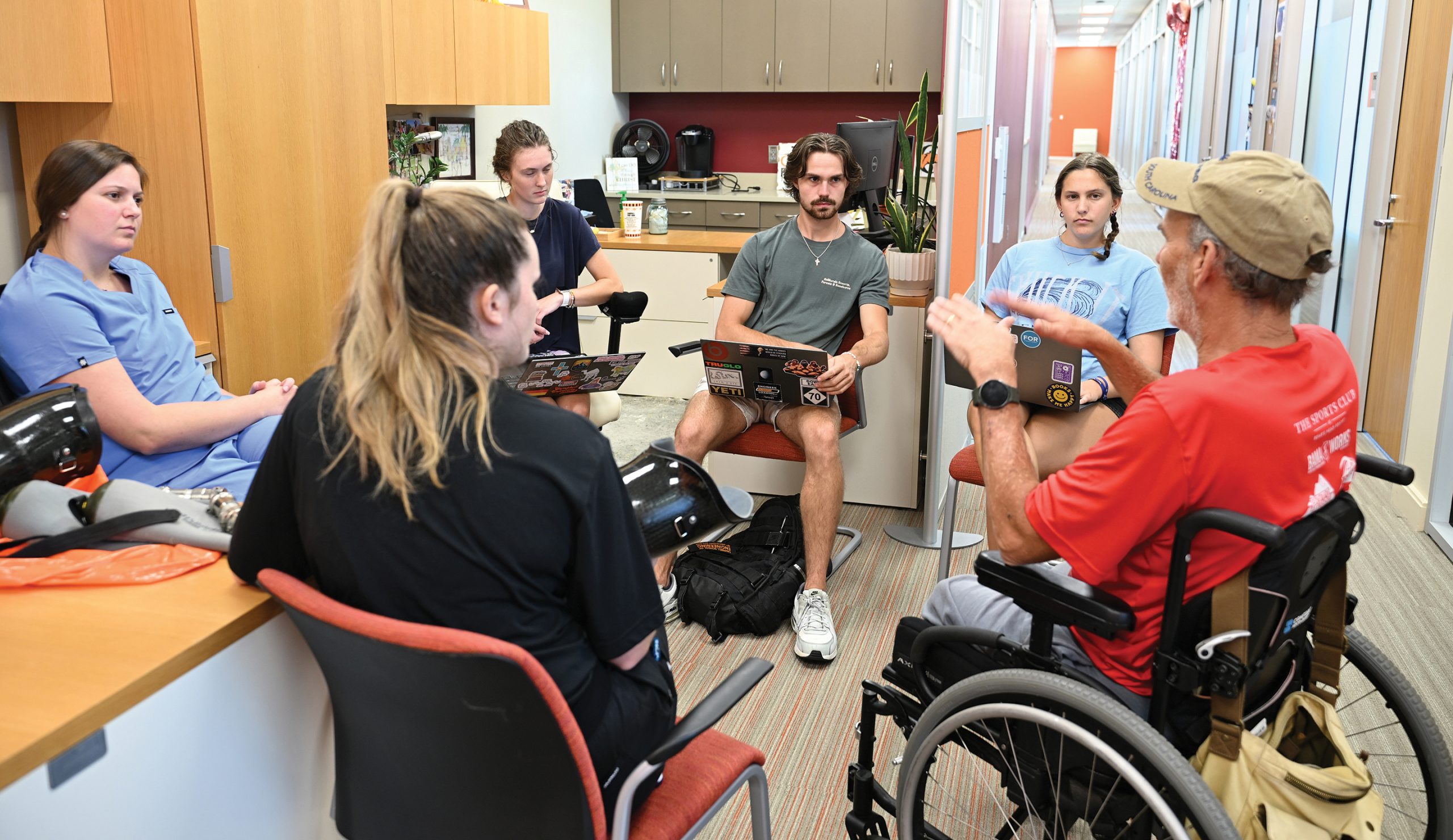
The five students, along with Dr. Kim Fowler from the School of Engineering and Dr. Lori Leineke and Dr. T.R. Goins from the Department of Physical Therapy, worked with Thingelstad for several months beginning last fall — determining his goals and what they needed to do to make them happen. The group monitored vitals, lap times and overall comfort as he swam countless laps using an assortment of fins and custom-designed alternations. Their work was made possible through the generosity of Dr. James and Veronica Purvis — James is a 2009 Campbell graduate and a member of Campbell’s Board of Trustees.
On this day in April, the fins are very close to the final design. He says there’s a big difference between the feel of the custom fins and what he was testing at the beginning of all of this. His hips are getting the most benefit from his newfound ability to swim — most sports and training programs for people like him focus on the upper body.
He also enjoys seeing the enthusiasm from the students he’s working with and being part of a project that is not only helping him, but may help others down the line.
“These students are just so optimistic, and at my age, optimism doesn’t come easy. In fact, it left me a long time ago,” he says. “I think what these kids are doing in physical therapy and in engineering is just so important.”
Macon and Underwood presented their role in Thingelstad’s therapy and training at the 2026 Wiggins Library Academic Symposium. Bonner, Baker and Fitzkee also presented the engineering side at the Symposium and presented it as their Senior Project prior to graduation in May. The final design was finished just days before they spoke, and Bonner calls the experience both educational and fulfilling.
“To see him go from not being able to have any propulsion from his lower body at the beginning to being able to kick and swim again just made me really happy,” she says. “It meant a lot to see that my work could help somebody in that manner, because that’s really my end goal with engineering — to improve the quality of life for others.”
Fitzkee says the experience showed her that engineering is more than math and science — listening to others, whether they’re working on your team or you’re working for them, is a big key to success.
“In engineering, we’re taught to see things as very quantitative,” she says. “In working with the [physical therapy students], we all had to look at it from a different angle and not exactly ‘quantify’ the results, but rather, adjust based on the man we were doing this for. Just getting his opinion helped a great deal, and it caused us to change our mindset on ways that we can get the best results.”
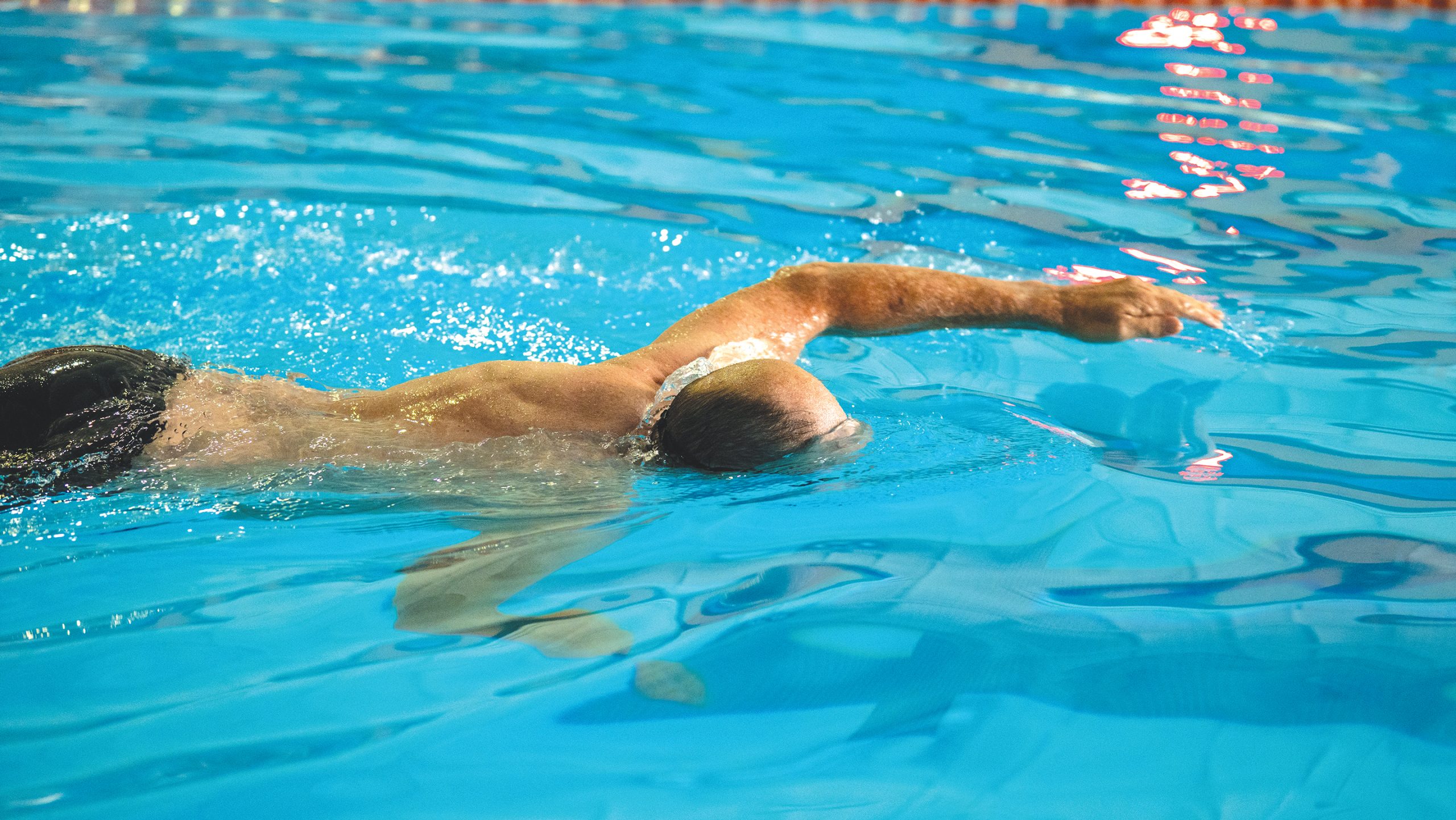
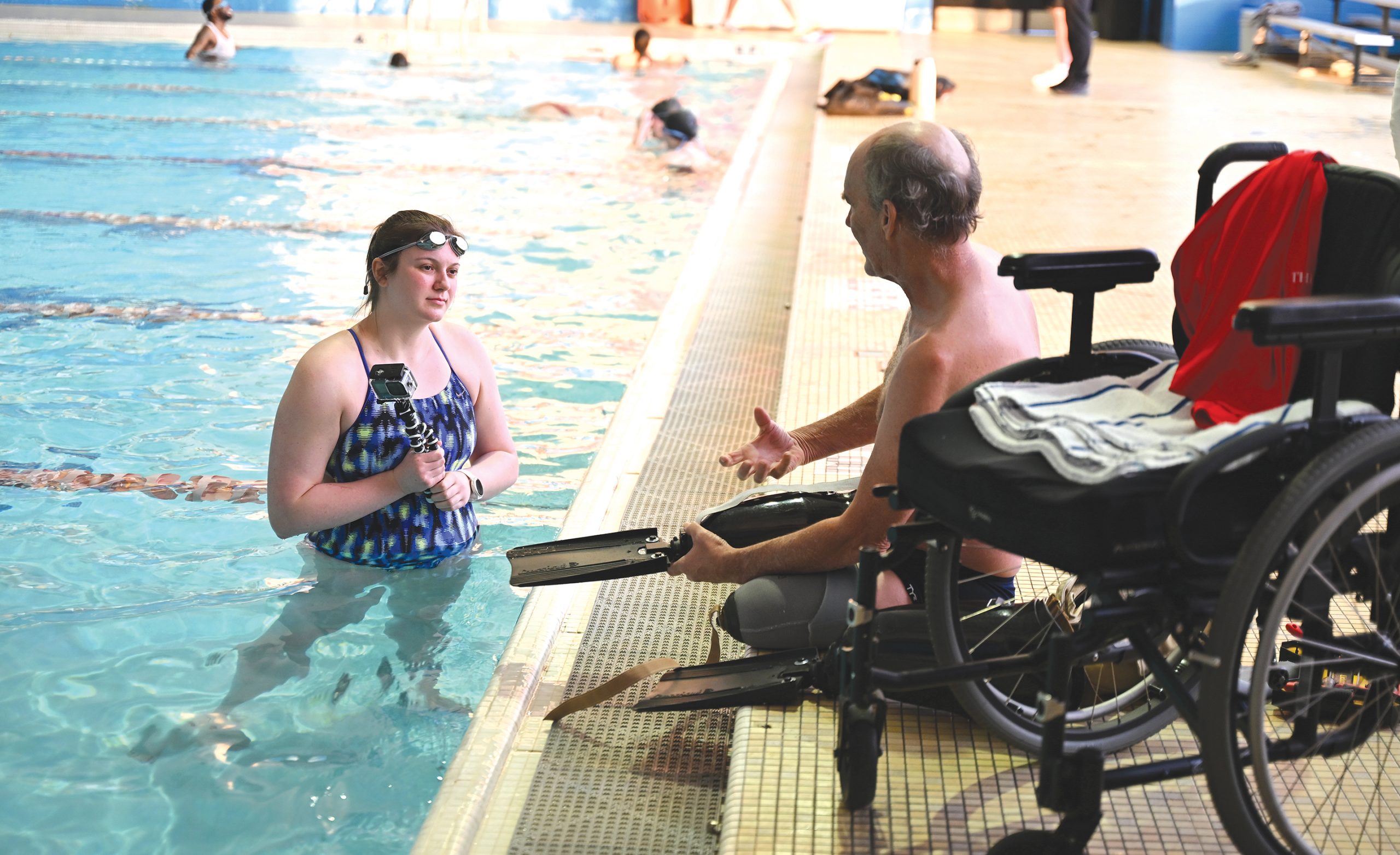
It’s late in the afternoon, and the sunbeams are starting to pierce the front windows of the aquatic center, illuminating the pool as Thingelstad finishes his final laps for science. In between heart rate tests with the professors and short Q&As after each lap, he chats with Baker about the feel of the latest alteration and with Bonner — who’s the one on this day in a swimsuit and a GoPro attached to her head to document his movements underwater.
For him, the experience has benefited more than his physical health. He’s made friends at Campbell, and he says he’s proud to have taken part in the work and research that’s gone into making the prosthetics.
“Campbell has been so good to me,” he says. “When I moved here about 16 years ago, I had no idea I would ever have anything to do with Campbell. What these students, Lori and T.R. have done for me … I just can’t thank them enough. They’ve been fantastic.
“I really love being out there. I do stuff now, I travel and I play sports. I wasn’t doing any of that before I met them. So all of this is a direct relation to what Campbell has done for me. I’m so grateful.”
🐠🐠🐠
The work performed by students and faculty in the Doctor of Physical Therapy program and the School of Engineering was made possible through the generous support of Dr. James (’09) and Veronica Purvis. Their commitment to innovation, interprofessional education, and student-centered learning provided Campbell students with the opportunity to apply their skills to a real-world challenge while improving the quality of life for others.